
Views: 0 Author: Site Editor Publish Time: 2025-12-15 Origin: Site


In industries where hygiene is non-negotiable—such as food processing, pharmaceuticals, and medical device manufacturing—the integrity of your piping system is paramount. One small crack, a rough surface, or an incompatible material can lead to contamination, product loss, and costly downtime. This is where stainless steel sanitary pipe fittings come into play. Unlike standard industrial pipes, these components are engineered to meet strict cleanliness requirements, ensuring that bacteria have nowhere to hide.
However, selecting the right components isn't just about picking shiny metal. It involves navigating a complex web of international and regional standards. These regulations dictate everything from the chemical composition of the steel to the microscopic smoothness of the inner walls. For engineers and procurement managers, understanding these standards is essential for maintaining compliance and ensuring the safety of the end consumer.
This guide breaks down the essential standards governing sanitary fittings. We will explore the organizations that set the rules, the specific material requirements for grades like 304 and 316L, and how surface finish metrics like Ra affect system performance. By the end, you will have a clear roadmap for selecting the right fittings for your specific application.
Sanitary standards exist to ensure that processing equipment can be cleaned effectively and does not contribute to product contamination. In sectors like biotechnology and dairy, "clean" means microscopic sterility. Consequently, stainless steel sanitary pipe fittings must be designed to withstand rigorous cleaning protocols, such as Clean-in-Place (CIP) and Sterilize-in-Place (SIP), without corroding or degrading.
Adhering to recognized standards provides a common language for manufacturers and buyers. It ensures that a clamp bought in Germany fits a pipe manufactured in China and that both meet the necessary hygiene criteria. Without these standards, ensuring compatibility and safety would be nearly impossible.
Several major organizations establish the guidelines for sanitary fittings globally. While they often overlap, knowing the difference is crucial depending on your geographic location and industry.
Originating in the United States, 3-A standards are widely recognized in the food, beverage, and dairy industries. The primary goal of 3-A is to ensure that equipment is designed for cleanability. Fittings that meet 3-A standards typically feature smooth surfaces, free of crevices where bacteria could accumulate.
The American Society of Mechanical Engineers (ASME) sets the BPE standard, which is the global benchmark for the biopharmaceutical industry. ASME BPE covers the design, materials, construction, inspection, and testing of vessels, piping, and related accessories. It is generally more stringent than food-grade standards, focusing heavily on sterility and high-purity applications.
ISO standards are used globally and cover a vast range of specifications. For sanitary pipes, ISO standards often dictate tube dimensions and thread types, ensuring international interchangeability. The scraped product data specifically notes compliance with ISO 9001 quality management systems, indicating a commitment to consistent manufacturing processes.
Common in Europe, DIN standards specify a range of metric tube sizes and fittings. DIN 11850 and DIN 11851 are frequently referenced for sanitary pipes and unions in the brewing and food industries.
The foundation of any standard is the raw material. For sanitary applications, the 300-series austenitic stainless steels are the industry workhorse.
This is the most versatile and widely used stainless steel grade. It offers excellent corrosion resistance and formability, making it suitable for many food processing and industrial applications. However, it is less resistant to chlorides and saline environments compared to its 316 counterpart.
The "L" stands for "Low Carbon," which enhances weldability and reduces the risk of corrosion after welding. 316L contains molybdenum, which significantly increases resistance to chemical attack and chlorides. This grade is often the standard for pharmaceutical and high-purity medical applications.
As noted in product specifications for high-precision manufacturers, medical-grade 316L is often used for critical applications requiring high pressure resistance (≥20MPa) and excellent biocompatibility, while 304 serves general industrial needs.
One of the most critical aspects of a sanitary fitting is its surface finish. A surface that looks smooth to the naked eye can look like a mountain range under a microscope. These microscopic peaks and valleys can trap bacteria.
Standards measure surface smoothness using "Roughness Average" (Ra). The lower the Ra value, the smoother the surface.
Industrial/General: Ra values might be higher, as microscopic cleaning isn't the primary concern.
Sanitary/Food: Typically requires an Ra of 0.8μm (32μin) or less.
Pharmaceutical/High Purity: Often requires an Ra of 0.4μm (15μin) or less, sometimes with electropolishing.
High-quality precision pipes typically boast an inner wall roughness of Ra≤0.4μm. This level of smoothness is achieved through precision cold-rolling processes, ensuring that fluids flow with minimal friction and no residue is left behind after cleaning.
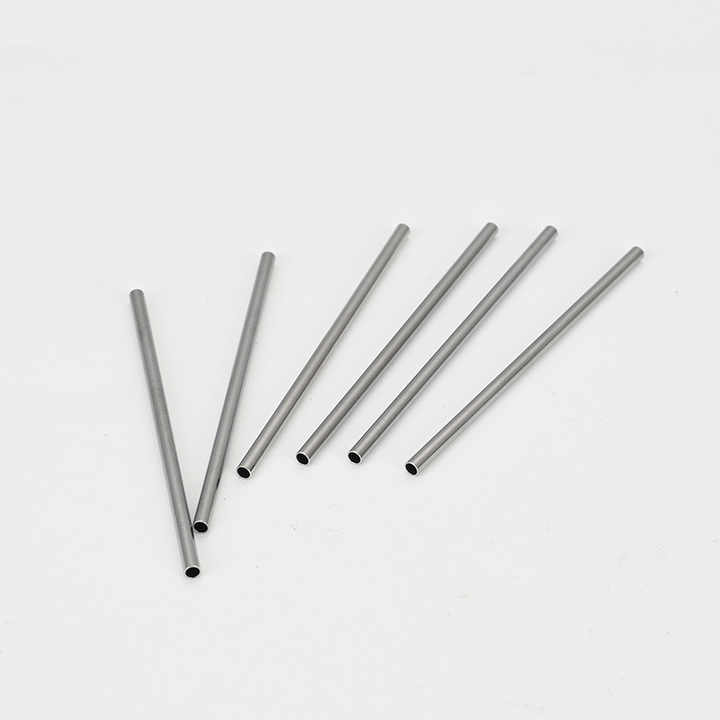
Standards also dictate the physical dimensions of the fittings to ensure tight seals and structural integrity. This includes the Outer Diameter (OD), Wall Thickness, and length.
In medical and instrumentation applications, tolerances are incredibly tight. For example, precision stainless steel seamless pipes might have an OD range of 0.1mm to 6mm with a tolerance of just ±1%. This level of accuracy is vital for automated equipment and medical devices where even a microscopic deviation can cause system failure.
To help visualize the differences, here is a breakdown of how different standards apply to sanitary fittings:
Feature | 3-A Sanitary | ASME BPE | DIN 11850 | ISO 1127 |
|---|---|---|---|---|
Primary Industry | Food & Dairy | Biopharma | Food & Chemical (Europe) | General Industrial |
Key Material | 304 / 316L | 316L | 304 / 316L | 304 / 316L |
Surface Finish | Moderate (Ra < 0.8μm) | High Purity (Ra < 0.4μm) | Moderate | Variable |
Dimensions | Imperial (Inches) | Imperial (Inches) | Metric (mm) | Metric (mm) |
Focus | Cleanability | Sterility | Compatibility | Interchangeability |
Standards don't just stop at the manufacturing of the part; they also apply to how the fittings are installed.
For sanitary applications, seamless tubes are often preferred over welded ones because the weld seam can be a weak point for corrosion and bacterial growth. If welded tubes are used, the weld bead must be rolled or polished flat to match the pipe's surface. Precision fittings are frequently classified as "Seamless" to guarantee uniformity and high pressure resistance.
Depending on the standard and application, pipes may require specific end treatments. These can include:
Necking or Flaring: Changing the diameter at the end of the tube to fit specific connections.
Threading: Creating screw threads for mechanical connections (though less common in ultra-hygienic zones due to cleaning difficulty).
Passivation: A chemical treatment that enhances the natural corrosion resistance of stainless steel.
Choosing the correct stainless steel sanitary pipe fittings involves balancing strict regulatory requirements with operational realities. Whether you are building a new vaccine production line or upgrading a dairy plant, failure to adhere to the correct standards can result in compliance violations and safety risks.
Always verify the material certificates and surface finish reports from your supplier. High-quality suppliers will provide documentation confirming that their products meet the specific ISO, ASTM, or DIN standards required for your project. Look for manufacturers who offer customization options, such as electropolishing or specific dimensional tolerances, to ensure the fittings integrate perfectly into your system.


