


Views: 0 Author: Site Editor Publish Time: 2025-08-11 Origin: Site


Miniature stainless steel tubes might seem like a niche component, but these precision-engineered products play crucial roles across countless industries. From medical devices that save lives to aerospace components that reach for the stars, these tiny tubes deliver big performance where it matters most.
Whether you're an engineer designing the next breakthrough medical device, a manufacturer seeking reliable components for precision instruments, or a procurement specialist evaluating materials for critical applications, understanding the unique properties and applications of miniature stainless steel tubes can make the difference between project success and costly failures.
This comprehensive guide explores everything you need to know about miniature stainless steel tubes, from their manufacturing processes and material grades to their diverse applications and selection criteria. By the end, you'll have the knowledge to make informed decisions about incorporating these versatile components into your projects.
Miniature stainless steel tubes are precision-manufactured tubular components with extremely small dimensions, typically featuring outer diameters ranging from 0.5mm to 25mm. These tubes maintain the corrosion resistance, strength, and biocompatibility properties of standard stainless steel while delivering exceptional precision in miniaturized form factors.
The "miniature" designation refers not just to size, but also to the exacting tolerances these tubes maintain. Wall thicknesses can be as thin as 0.1mm while maintaining structural integrity, making them ideal for applications where space constraints and performance demands intersect.
Miniature stainless steel tubes offer several distinctive properties that set them apart from standard tubing:
Dimensional Precision: These tubes achieve tolerances as tight as ±0.025mm, ensuring consistent performance across applications.
High Strength-to-Weight Ratio: Despite their small size, miniature stainless steel tubes maintain excellent structural properties, supporting significant loads relative to their weight.
Corrosion Resistance: The inherent corrosion resistance of stainless steel makes these tubes suitable for harsh environments and long-term applications.
Temperature Stability: Miniature stainless steel tubes perform reliably across wide temperature ranges, from cryogenic conditions to high-temperature environments.
The production of miniature stainless steel tubes requires specialized manufacturing techniques that differ significantly from standard tube production methods.
Most miniature stainless steel tubes are manufactured through a multi-stage drawing process. This begins with larger diameter tubes that are progressively reduced through a series of drawing dies. Each stage carefully controls the reduction ratio to maintain material properties while achieving the desired final dimensions.
The drawing process typically involves:
1.Initial Tube Preparation: Starting material is cleaned, inspected, and prepared for drawing
2.Progressive Drawing: Multiple drawing stages reduce diameter while controlling wall thickness
3.Intermediate Annealing: Heat treatment between drawing stages maintains material workability
4.Final Sizing: Precise final dimensions achieved through controlled drawing operations
Given the critical applications for miniature stainless steel tubes, manufacturers employ rigorous quality control measures:
Dimensional Inspection: Advanced metrology equipment verifies outer diameter, inner diameter, and wall thickness within specified tolerances.
Surface Quality Verification: Surface finish measurements ensure smoothness requirements are met for applications like medical devices.
Material Testing: Tensile strength, hardness, and chemical composition testing verify material properties.
Non-Destructive Testing: Eddy current testing and other NDT methods detect potential defects without damaging the product.
Selecting the appropriate stainless steel grade is crucial for miniature tube applications. Different grades offer varying combinations of corrosion resistance, mechanical properties, and specialized characteristics.
Grade 316L represents the most commonly specified material for miniature stainless steel tubes. The low carbon content provides excellent corrosion resistance and weldability, while the molybdenum addition enhances performance in chloride environments.
This grade excels in biomedical applications due to its biocompatibility and resistance to body fluids. The austenitic structure provides good formability, important for applications requiring bent or shaped tubes.
Grade 304 offers excellent general-purpose properties at a lower cost than 316L. While providing good corrosion resistance for many applications, it may not be suitable for chloride-rich environments or medical implant applications.
The higher carbon content of 304 compared to 316L can provide slightly higher strength properties, making it suitable for structural applications where maximum corrosion resistance is not required.
For demanding applications, specialized stainless steel grades may be necessary:
17-4 PH: This precipitation-hardening grade offers exceptional strength properties while maintaining reasonable corrosion resistance.
321: The titanium stabilization in grade 321 provides excellent high-temperature properties, making it suitable for aerospace and high-temperature applications.
Custom Alloys: Some applications require custom alloy compositions optimized for specific performance requirements.
The versatility of miniature stainless steel tubes makes them essential components across numerous industries, each with specific requirements and challenges.
The medical industry represents one of the largest markets for miniature stainless steel tubes. Their biocompatibility, corrosion resistance, and precision make them ideal for various medical applications.
Catheter Components: Miniature tubes serve as structural elements in catheters, providing the necessary strength and flexibility for navigating complex anatomical pathways.
Surgical Instruments: Precision surgical tools incorporate these tubes for irrigation, suction, and structural support functions.
Implantable Devices: Pacemaker leads, neurostimulation devices, and drug delivery systems rely on miniature stainless steel tubes for long-term biocompatibility and performance.
The aerospace industry demands materials that perform reliably under extreme conditions while maintaining minimal weight. Miniature stainless steel tubes meet these requirements in various applications.
Fuel Systems: High-pressure fuel delivery systems use miniature tubes for precise fuel metering and distribution.
Hydraulic Systems: Control surfaces and landing gear systems incorporate these tubes for hydraulic fluid transmission.
Instrumentation: Sensor systems and data acquisition equipment rely on miniature tubes for protection and structural support.
Precision instruments and electronic devices benefit from the stability and protection offered by miniature stainless steel tubes.
Sensor Protection: Environmental sensors use these tubes as protective housings while maintaining sensitivity to measured parameters.
Cable Protection: High-frequency cables and fiber optic lines gain electromagnetic shielding and physical protection from miniature stainless steel tubes.
Precision Mechanisms: Mechanical instruments incorporate these tubes as structural elements in precision positioning systems.
Successful application of miniature stainless steel tubes requires careful consideration of design parameters and performance requirements.
Wall thickness selection balances strength requirements with space constraints. Thinner walls reduce overall dimensions but may compromise pressure ratings or structural integrity. Engineers must evaluate the specific load conditions and safety factors for each application.
Inner diameter affects flow characteristics for fluid applications. Smaller diameters increase pressure drop but may be necessary for space-constrained applications. Surface finish becomes increasingly important as diameter decreases due to proportionally larger effects on flow resistance.
Burst pressure ratings must account for both material properties and geometric factors. The thin walls typical of miniature tubes can significantly affect pressure capabilities compared to standard tubing calculations.
Flexibility requirements may influence material selection and heat treatment conditions. Some applications require tubes that can be bent or formed during installation, while others prioritize maximum stiffness.
Temperature cycling effects on dimensional stability become more significant with miniature tubes due to their higher surface-to-volume ratios. Applications exposed to temperature variations must account for potential thermal expansion effects.
Chemical compatibility extends beyond basic corrosion resistance to include potential contamination issues. Medical and food-grade applications may require special cleaning procedures or surface treatments to ensure purity.
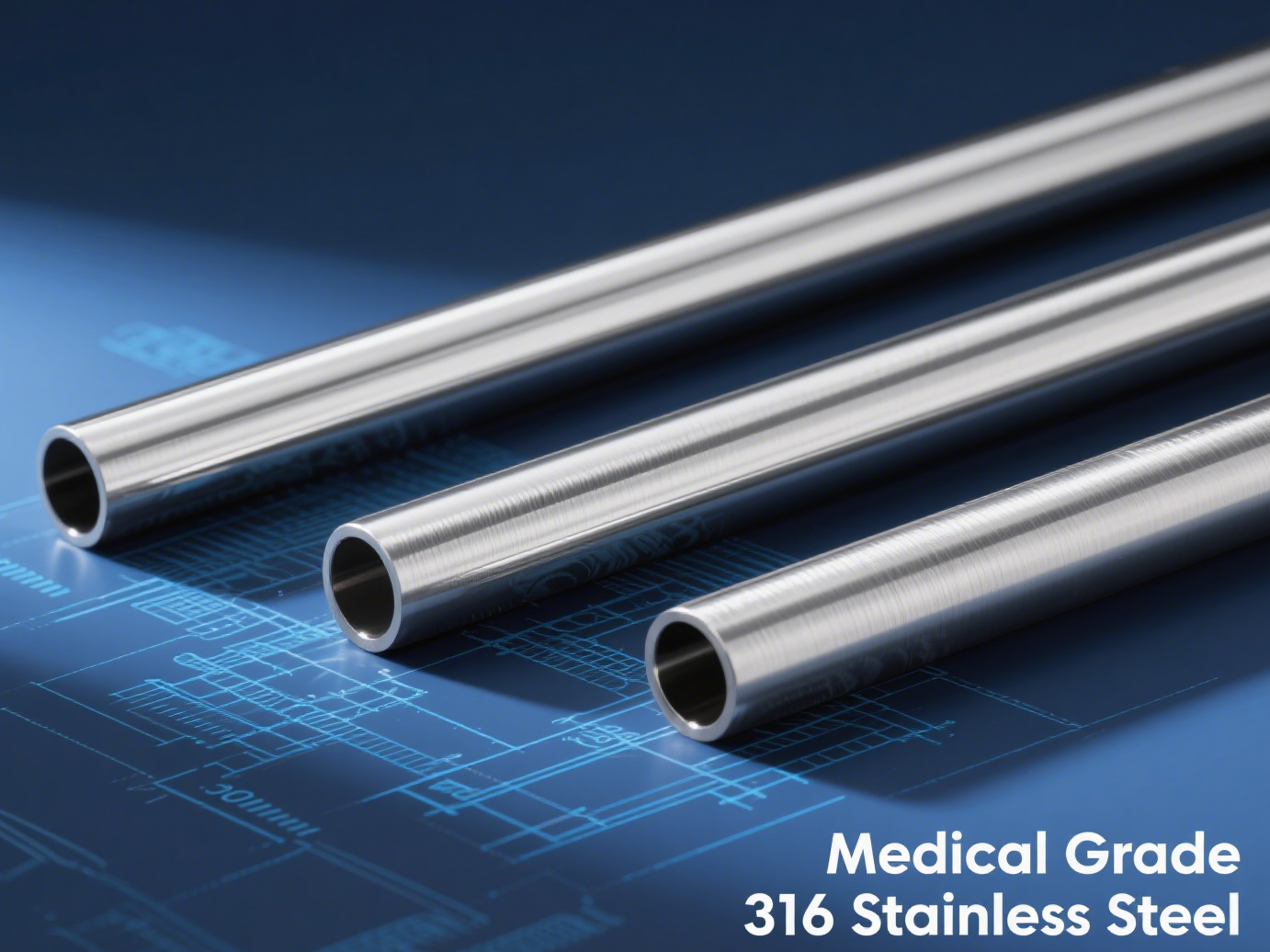
Meeting industry-specific quality standards is essential for miniature stainless steel tube applications, particularly in regulated industries like medical devices and aerospace.
ISO 13485 quality management systems ensure consistent manufacturing processes for medical device components. This standard requires comprehensive documentation and traceability throughout the manufacturing process.
FDA regulations for medical devices include specific requirements for materials used in different classes of medical devices. Miniature stainless steel tubes used in implantable devices must meet the most stringent requirements.
AS9100 certification demonstrates compliance with aerospace quality management requirements. This standard includes additional requirements for risk management, configuration management, and product safety.
Material certifications must demonstrate compliance with aerospace material specifications, including chemical composition, mechanical properties, and traceability requirements.
Proper handling and maintenance of miniature stainless steel tubes ensures optimal performance and longevity in applications.
Clean, dry storage environments prevent contamination and corrosion. Even stainless steel can be affected by certain environmental conditions, particularly in the thin cross-sections typical of miniature tubes.
Proper packaging protects against mechanical damage during storage and transportation. The small size of these components makes them vulnerable to handling damage if not properly protected.
Proper installation techniques prevent damage to the tube walls or ends. Standard tube fitting installation procedures may need modification for miniature sizes due to reduced wall thickness.
Contamination control during installation becomes increasingly important for miniature tubes, particularly those used in medical or high-purity applications. Even small amounts of contamination can significantly affect performance.
The miniature stainless steel tube industry continues to evolve with advancing technology and changing application requirements.
Advanced manufacturing techniques are enabling even smaller dimensions and tighter tolerances. Laser processing and precision machining technologies allow for features and modifications that were previously impossible.
New alloy developments focus on optimizing properties for specific applications. Custom compositions designed for particular performance requirements are becoming more economically viable for high-volume applications.
Digital manufacturing technologies are improving quality control and reducing production costs. Real-time monitoring and feedback systems enable immediate process adjustments to maintain optimal quality.
Selecting the optimal miniature stainless steel tube requires balancing multiple factors including material properties, dimensional requirements, quality standards, and cost considerations. Success depends on understanding your specific application requirements and working with experienced suppliers who can provide technical guidance and quality assurance.
Start by clearly defining your performance requirements, including dimensional specifications, environmental conditions, and regulatory requirements. Evaluate potential suppliers based on their technical capabilities, quality systems, and experience with similar applications. Consider the total cost of ownership, including not just initial purchase price but also installation costs, maintenance requirements, and potential failure consequences.
With proper selection and application, miniature stainless steel tubes provide reliable, long-lasting performance in the most demanding applications. Their combination of precision, strength, and corrosion resistance makes them indispensable components in advancing technology across industries.


