
Views: 0 Author: Site Editor Publish Time: 2026-01-15 Origin: Site


When designing medical devices, the margin for error is non-existent. Material selection is not just about durability or cost; it is about patient safety, bio-compatibility, and ensuring tools perform flawlessly under pressure. Among the various materials used in healthcare, stainless steel remains the gold standard. However, choosing the right grade—specifically between 304 and 316L—is a common hurdle for engineers and procurement specialists.
While both alloys look identical to the naked eye, their chemical compositions and performance characteristics differ significantly. Making the wrong choice can lead to corrosion, structural failure, or contamination issues during sterilization. Conversely, over-specifying a material can drive up manufacturing costs unnecessarily.
This guide explores the specific differences between these two popular grades. We will examine their chemical makeup, corrosion resistance, and specific applications to help you decide which medical stainless steel tube is right for your project.
Before comparing specific grades, it is helpful to understand what qualifies steel as "medical grade." In the medical industry, materials must be bio-compatible. This means they cannot react negatively with biological tissue or fluids. They must also withstand rigorous cleaning and sterilization processes without degrading.
Stainless steel is the material of choice because of its high corrosion resistance and formability. A medical-grade steel tube is typically used in everything from hypodermic needles to complex surgical implants. While many grades exist, the austenitic family—specifically the 300 series—is the most widely used. These steels are non-magnetic (in their annealed state), tough, and can be polished to a high mirror finish, which prevents bacteria from adhering to the surface.
The primary difference between 304 and 316L stainless steel lies in one specific element: molybdenum.
Grade 304 is composed of iron, chromium (usually 18%), and nickel (usually 8%). This combination provides excellent resistance to oxidation and rust. It is the most common form of stainless steel used globally across all industries, from kitchenware to industrial piping.
Grade 316L includes all the components of 304 but adds molybdenum (typically 2-3%). This addition drastically changes the steel's ability to resist corrosion, specifically from chlorides and acids. The "L" in 316L stands for "Low Carbon," which we will discuss later in this article.
Here is a breakdown of the typical chemical composition:
Element | Grade 304 (%) | Grade 316L (%) |
|---|---|---|
Chromium | 18.0 – 20.0 | 16.0 – 18.0 |
Nickel | 8.0 – 10.5 | 10.0 – 14.0 |
Molybdenum | None | 2.0 – 3.0 |
Carbon (Max) | 0.08 | 0.03 |
Iron | Balance | Balance |
The presence of molybdenum in 316L creates a barrier against "pitting." Pitting is a localized form of corrosion that creates small holes in the metal, which can be disastrous in sterile medical environments.
Despite the superior corrosion resistance of 316L, Grade 304 remains a dominant material in the medical field. Why? Because it offers a perfect balance of performance and cost-effectiveness for applications that do not require extreme protection.
You should consider Grade 304 for equipment that will not be permanently implanted in the body or exposed to high concentrations of saline and harsh acids. It is highly formable, making it ideal for deep drawing and shaping into holloware.
Common applications for 304 medical stainless steel tubes include:
Hospital Furniture: Bed frames, IV stands, and examination tables.
Surgical Trays: Bowls, kidney dishes, and instrument trays.
Standard Tubing: Catheters and guides that have limited contact duration with bodily fluids.
Exterior Housings: Casings for medical monitoring equipment.
If your application involves standard environmental conditions and routine cleaning, 304 is likely the most economical and functional choice.
Grade 316L is often referred to as "surgical steel" or "marine grade" stainless. If your medical device faces a high-chloride environment, 316L is the necessary choice.
Chlorides are found in salt, and crucially, in human blood and bodily fluids. When standard 304 steel is exposed to these fluids for extended periods, it risks corroding. The molybdenum in 316L specifically targets this vulnerability. Furthermore, medical tools undergo repeated cycles of sterilization using strong chemical solvents and autoclaves. Grade 316L holds up better against these harsh cleaning protocols over time.
For high-precision components, such as those found in our Medical Tubes selection, 316L ensures longevity and safety.
Common applications for 316L include:
Implants: Screws, plates, and prosthetics that remain inside the body.
Surgical Instruments: Scalpels, forceps, and retractors.
Pharmaceutical Manufacturing: Pipes and tanks used to produce medicines where purity is essential.
Blood Exchange Devices: Any tubing directly managing blood flow or dialysis.
You will often see 316 and 316L listed separately. The difference is the carbon content. The "L" stands for "Low Carbon."
Standard 316 stainless steel has a maximum carbon content of 0.08%. Grade 316L has a maximum carbon content of 0.03%. While this seems like a minor chemical tweak, it has massive implications for manufacturing, specifically welding.
When stainless steel is welded, high temperatures can cause "carbide precipitation." This is a phenomenon where the chromium in the steel bonds with the carbon, depleting the chromium levels at the weld boundary. Since chromium is what prevents rust, this depletion makes the welded area susceptible to corrosion.
Because 316L has such low carbon, there is less carbon available to bond with the chromium. This ensures the corrosion resistance remains intact even after heavy welding. For manufacturers creating complex tubular assemblies, 316L is almost always the preferred specification over standard 316.
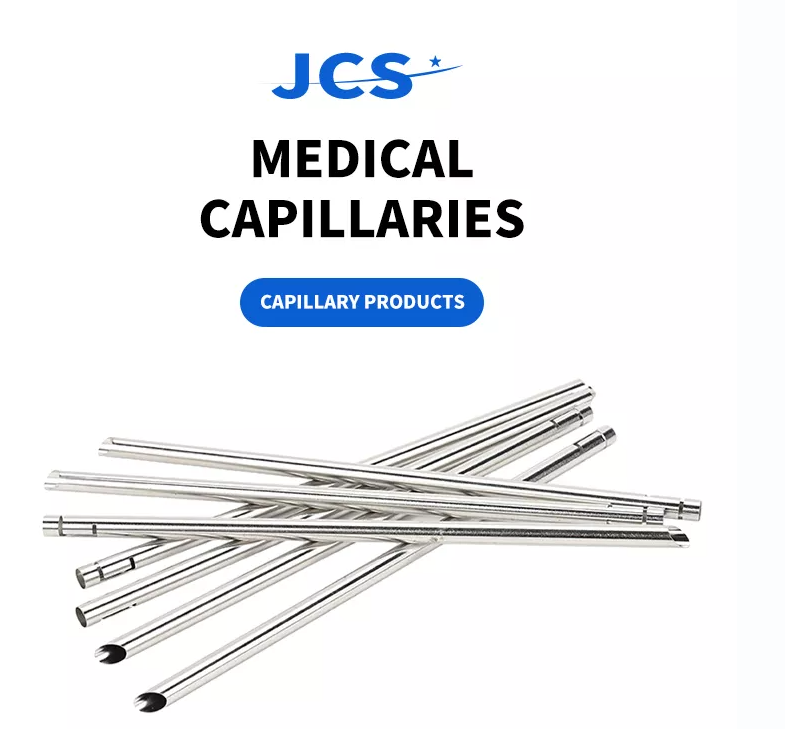
One of the most specialized applications in this field is the medical accessory capillary. These are ultra-small diameter tubes with very thin walls, used in minimally invasive surgery, sensor protection, and precision needle manufacturing.
For a capillary tube, the mechanical properties of the grade are just as important as the chemical ones.
Hardness and Stiffness: 304 can be work-hardened to achieve a very high tensile strength. This is excellent for needles that need to penetrate skin without bending.
Ductility: 316L is slightly more ductile. If the capillary needs to be bent into complex shapes or coiled without cracking, 316L provides better formability.
When sourcing a capillary, engineers must specify the grade based on the "stiffness" required versus the "corrosion resistance" required.
Hospitals utilize various sterilization methods, and your material choice must survive them all.
Autoclaving (Steam): This is the most common method. Both 304 and 316L handle high-temperature steam well. However, if the steam is generated from water with high chloride content, 304 may eventually show signs of surface staining.
Chemical Sterilization: Harsh chemicals can attack the surface of the steel. 316L offers superior resistance to pitting during these chemical baths.
Radiation: Both grades generally withstand gamma radiation sterilization without significant degradation.
Here is a quick reference guide for selection:
Feature | Grade 304 | Grade 316L |
|---|---|---|
Corrosion Resistance | Good (Standard) | Excellent (High) |
Chloride Resistance | Low | High |
Cost | Lower | Higher |
Weldability | Good | Excellent |
Best For | Furniture, Trays, Short-term contact | Implants, Surgical Tools, Long-term contact |
Regardless of which grade you choose, the quality of the manufacturing process is vital. A medical stainless steel tube must have a pristine surface finish. Any microscopic scratches or roughness can become a breeding ground for bacteria (bio-film), which is difficult to remove even with sterilization.
When ordering, you should look for suppliers who provide Mill Test Reports (MTRs). These documents verify the chemical composition of the batch, proving that the Molybdenum content in your 316L is actually where it should be.
The choice between 304 and 316L ultimately comes down to the environment your device will inhabit.
If your priority is cost efficiency for equipment like hospital beds, IV poles, or general lab equipment, Grade 304 is a reliable and safe industry standard. It offers durability and decent protection at a lower price point.
However, if your device touches the human body internally, handles blood, or undergoes aggressive chemical cleaning, Grade 316L is not just a better choice—it is a necessary one. The addition of molybdenum provides the insurance policy you need against corrosion and failure.
For high-precision manufacturing, ensure you consult with a specialist who understands the nuances of medical accessory capillary production to get the exact temper and finish your project demands.


