
Views: 0 Author: Site Editor Publish Time: 2026-09-20 Origin: Site


Tubing stainless steel refers to precision stainless steel pipes and tubes—including thin-wall, heat exchanger, and welded variants—used across medical, industrial, and heating applications. The right choice depends on temperature resistance, wall thickness, and manufacturing method (seamless vs. welded), with 304 and 316L being the most common grades for durability and corrosion resistance.
Choosing the right stainless steel tubing isn't just a matter of picking a diameter off a catalog page. Engineers and procurement teams need to weigh grade, wall thickness, pressure tolerance, and manufacturing method before committing to an order—especially when the tubing will end up inside a heat exchanger, a medical device, or a high-temperature industrial system.
This guide breaks down the core categories of tubing stainless steel: high-temperature resistant pipe, wall tube, thin wall tube, heat exchanger piping, and welded stainless steel pipe. Along the way, we'll cover what separates these tubing types, where each performs best, and how to decide which one fits your project.
Tubing stainless steel is manufactured with tighter tolerances and higher-grade alloys than standard carbon steel piping. Most stainless tubing is produced from 304 or 316L stainless steel, chosen for corrosion resistance, biocompatibility, and the ability to withstand repeated thermal cycling.
Unlike standard structural pipe, precision stainless steel tubing is often cold-rolled to achieve outer diameters as small as 0.1mm and inner wall roughness of Ra≤0.4μm. This level of precision matters in applications like medical devices, where dimensional consistency and surface finish directly affect performance.
High-temperature resistant stainless steel pipe is engineered to maintain structural integrity and pressure resistance under extreme thermal loads. A common example is the seamless stainless steel heating tube, which pairs a stainless steel outer shell with a spiral electric heating alloy wire inside, insulated with heat-conductive magnesia sand for reliable sealing.
These heating tubes typically support a maximum operating temperature of 850°C and pressure resistance up to 20MPa, making them suitable for both explosion-proof and standard environments. Because of this resilience, high-temperature stainless steel pipe shows up across several demanding sectors:
Petrochemical processing, where sustained heat exposure is constant
Electric power generation equipment
Food processing machinery
Household appliances, including electric stoves and water heaters
Choose high-temperature resistant tubing if your application involves sustained heat above 500°C or requires fast thermal response with accurate temperature control. For lower-heat environments, standard-grade tubing is usually more cost-effective.
"Wall tube" is a broad category covering stainless steel tubing built for structural or fluid-handling roles, while thin wall stainless steel tube refers specifically to tubing manufactured with reduced wall thickness—often between 0.05mm and 1mm—for applications where weight, flexibility, or precision matters more than bulk strength.
Thin wall stainless steel tube is commonly produced through precision cold-rolling and is favored in industries where space and weight constraints are critical, such as:
Medical device manufacturing
Precision instruments
Automation equipment
Electronics assemblies
The tradeoff with thin wall tubing is pressure tolerance. While premium thin wall stainless steel tube can still handle pressure resistance of 20MPa or higher, thinner walls generally mean lower maximum pressure ratings compared to thicker-walled counterparts. Choose thin wall tubing if your priority is precision and weight savings; choose standard wall tube if the application demands higher pressure tolerance or structural rigidity.
Heat exchanger piping is designed around one core function: moving heat efficiently between two mediums without failing under pressure or corrosion. Stainless steel is a natural fit here because of its combination of thermal conductivity, corrosion resistance, and ability to be manufactured into small-diameter, high-precision tubing.
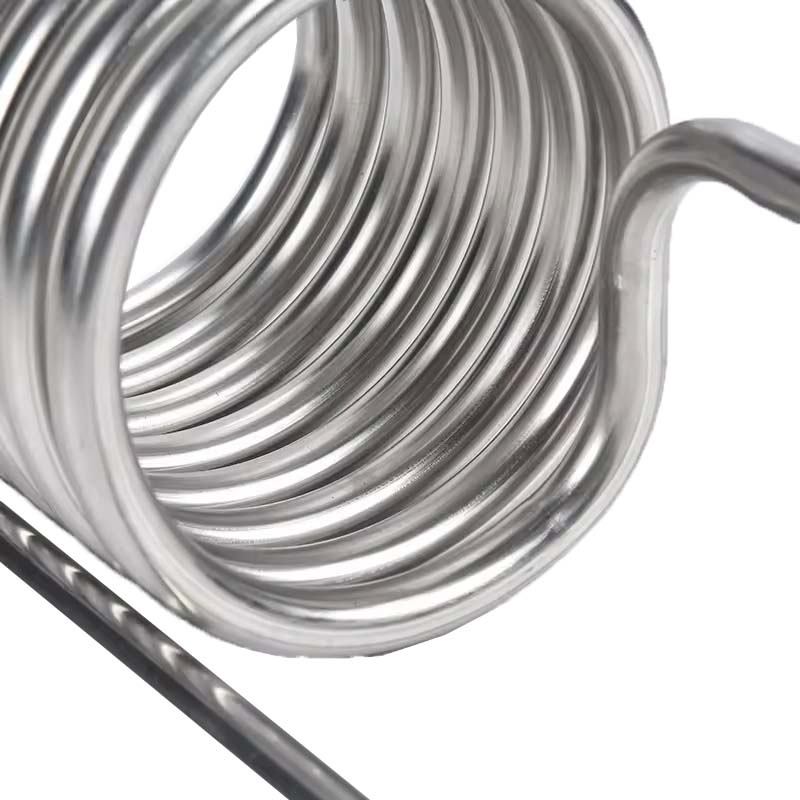
Spiral and coiled stainless steel tubes are frequently used in heat exchanger systems, particularly where compact design and consistent heat transfer are priorities. These tubes are often customized with U-shaped or spiral configurations to maximize surface area within a limited footprint—common in oven drying equipment, cooling coils, and industrial heat exchange systems.
Welded stainless steel pipe is manufactured by rolling flat stainless steel sheet into a cylindrical shape and welding the seam, as opposed to seamless tubing, which is extruded or drawn without a joint. Welded pipe is typically more cost-effective to produce at larger diameters and is widely used in:
Construction and structural applications
Laboratory equipment
Waterproof piping systems
Decorative and architectural installations
Choose welded stainless steel pipe if budget and larger diameters are priorities. Choose seamless tubing if the application involves high pressure, medical use, or situations where the weld seam could introduce a point of failure.
Tubing Type | Typical Wall Thickness | Max Temperature/Pressure | Common Applications |
|---|---|---|---|
High-temperature resistant pipe | Standard to thick | Up to 850°C / 20MPa | Petrochemical, power generation, water heaters |
Wall tube | Standard | Application-dependent | General industrial, structural |
Thin wall stainless steel tube | 0.05mm–1mm | ≥20MPa (grade-dependent) | Medical devices, precision instruments |
Heat exchanger piping | Thin to standard | Application-dependent | Cooling coils, ovens, spiral heat exchangers |
Welded stainless steel pipe | Standard to thick | Lower pressure tolerance than seamless | Construction, labs, decorative use |
Most tubing stainless steel products are manufactured from either 304 or 316L stainless steel, and the choice between them comes down to environment and application:
304 stainless steel offers strong general-purpose corrosion resistance and is common in industrial, decorative, and food-grade applications.
316L stainless steel contains molybdenum, which improves resistance to chlorides and harsh chemical environments. This makes 316L the preferred choice for medical-grade tubing and applications involving biocompatibility requirements.
Choose 316L if your application involves medical devices, implants, or exposure to corrosive chemicals. Choose 304 if cost efficiency matters more than chemical resistance and the environment is less aggressive.
Seamless stainless steel tubing is drawn or extruded without a joint, giving it higher pressure resistance and structural uniformity. Welded stainless steel pipe is formed by rolling and welding a seam, making it more economical for larger diameters but generally less suited to high-pressure or medical applications.
Precision manufacturers can produce thin wall stainless steel tube with wall thickness as low as 0.05mm and outer diameters starting at 0.1mm, using cold-rolling processes that maintain inner wall roughness of Ra≤0.4μm or better.
High-temperature resistant stainless steel heating pipe can typically operate at temperatures up to 850°C while maintaining pressure resistance of up to 20MPa, depending on the specific design and alloy composition.
Yes. Medical-grade 316L stainless steel tubing is manufactured to meet biocompatibility standards and is compliant with ISO 9001 quality management systems, making it suitable for medical devices, endoscopic components, and surgical instruments.
Delivery timelines vary by order type. Stock stainless steel tubing products typically ship within 3–7 days after payment, while custom-manufactured tubing—such as tubing with specific necking, flaring, or surface treatments—usually takes 20–45 days.
Selecting the correct tubing stainless steel product comes down to matching the tube's properties to your application's real-world demands. High-temperature environments call for heating-resistant pipe rated up to 850°C, medical and precision applications benefit from thin wall 316L tubing, and heat transfer systems perform best with tubing designed specifically for thermal efficiency.
Before finalizing a supplier, confirm the grade, wall thickness, tolerance, and any required surface treatments align with your technical specifications. If your project calls for customization—like necking, flaring, or specific surface finishes—working with a manufacturer experienced in precision cold-rolling and ISO 9001 compliance will help ensure the tubing performs as expected under real operating conditions.


