
Views: 0 Author: Site Editor Publish Time: 2025-08-07 Origin: Site


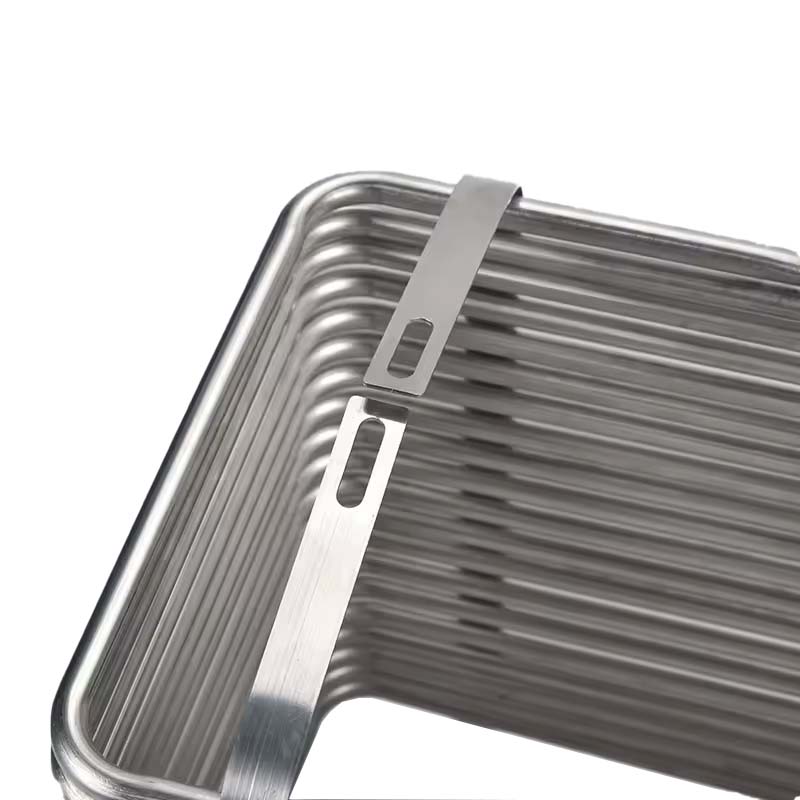
Stainless steel coiled pipes, with their compact structure, efficient heat transfer performance, and excellent corrosion resistance, are widely used in chemical reactions, refrigeration systems, heat exchange equipment, and other fields. Their manufacturing process integrates materials science and precision processing technology, requiring precise control of multiple processes to ensure the dimensional accuracy, mechanical properties, and operational reliability of the coiled pipes.
 The first step in manufacturing stainless steel coiled pipes is to select appropriate pipes according to the application scenario. In terms of material, 304 stainless steel is mostly used in general working conditions (such as civil hot water circulation). It contains 18% chromium and 8% nickel, with basic corrosion resistance and good plasticity, suitable for bending forming. In highly corrosive environments such as chemical industry and marine applications, 316L stainless steel is required. Due to the addition of 2-3% molybdenum, its resistance to pitting and crevice corrosion is significantly improved. For ultra-low temperature refrigeration systems (such as -196℃ liquid nitrogen transportation), 904L super austenitic stainless steel is often used to ensure toughness in extreme temperatures.
 The pipe specifications need to be determined based on the bending radius and working pressure of the coiled pipe. Thin-walled pipes (with a wall thickness of 0.5-2mm) are suitable for making small-radius coiled pipes (bending radius ≤ 5 times the pipe diameter). For example, the evaporator coil of household air conditioners usually uses thin-walled 304 pipes with a diameter of φ6-φ12mm. Thick-walled pipes (with a wall thickness of 3-10mm) are used in high-pressure scenarios, such as the heating coil of chemical reactors, mostly using 316L pipes with a diameter of φ20-φ50mm to withstand working pressures above 10MPa. In addition, the surface state of the pipe also needs to be considered. Bright annealed pipes have smooth inner walls, which can reduce fluid resistance and are suitable for sanitary scenarios such as food and medicine.
Coil forming is the core of the manufacturing process. It is necessary to select an appropriate bending process according to the pipe specifications and bending requirements, with the key being to control the wall thickness change and ovality during bending.
Thic corrosion k-walled large-diameter pipes (such as φ25-φ80mm) require hot bending process. First, the part of the pipe that needs to be bent is heated to 800-1050℃ (the easy bending temperature range of austenitic stainless steel) by medium-frequency induction heating, kept warm for 5-10 minutes to make the temperature uniform, and then bent by a hydraulic press pushing the mold. During hot bending, nitrogen must be continuously introduced for protection to prevent high-temperature oxidation. For coiled pipes with a large bending radius (such as ≥ 10 times the pipe diameter), coreless hot bending can be used, but rounding treatment is required after bending to ensure that the pipe diameter deviation is ≤ ±0.5mm.
Special-shaped coiled pipes (such as conical coils with gradually changing spiral diameter) require three-dimensional CNC bending equipment. By adjusting the mold angle and feeding amount in real-time, complex trajectory bending is realized, with forming accuracy up to ±0.1mm/m.
When the length of a single straight pipe is insufficient or multiple sections of coiled pipes need to be combined, welding connection is required, and the welding quality directly affects the sealing of the coiled pipe.
Laser welding or tungsten inert gas (TIG) welding is mostly used for thin-walled pipe welding. Laser welding has a very small heat-affected zone (≤ 0.3mm), suitable for pipes below φ10mm, with a welding speed of 1-3m/min and weld strength reaching more than 90% of the base metal. TIG welding is applicable to pipes with φ12-φ25mm. During welding, the same material welding wire (such as 304 pipe with ER308 welding wire) needs to be filled, and the protective gas is argon with a purity of 99.99% and a flow rate of 10-15L/min to avoid weld oxidation.
Submerged arc welding or metal inert gas (MIG) welding is commonly used for thick-walled pipe welding. Submerged arc welding covers the arc with flux, which can weld seams with a thickness of up to 10mm at one time, suitable for pipes above φ50mm. MIG welding uses automatic wire feeding, with welding efficiency 3-5 times higher than TIG welding. The weld needs to be subjected to X-ray flaw detection to ensure no pores, slag inclusion, or other defects.
After welding, the weld needs to be passivated. Soak it in 20% nitric acid solution for 10-15 minutes, then rinse with clean water to restore its corrosion resistance.
There is residual stress in the coiled pipe after cold bending or welding, which may cause stress corrosion during use and needs to be eliminated through heat treatment.
Thin-walled coiled pipes formed by cold bending are subjected to bright annealing treatment. The coiled pipes are put into a continuous annealing furnace, heated to 1050-1100℃ under nitrogen protection, kept warm for 3-5 minutes, and then rapidly cooled (cooling rate ≥ 50℃/s) to restore the austenitic structure of the steel and eliminate work hardening. After treatment, the elongation of the pipe can be increased from 30% after cold bending to more than 45%, and the toughness is significantly improved.
Thick-walled coiled pipes after hot bending or welding need overall quenching and tempering treatment. They are heated to 900-1000℃ and kept warm for 1-2 hours (calculated by increasing 1 hour for every 25mm of wall thickness), then cooled with the furnace to 600℃ and air-cooled to eliminate welding stress and thermal deformation. For coiled pipes used in low-temperature environments, -196℃ deep cooling treatment is also required to reduce the content of retained austenite and improve low-temperature impact toughness.
Dimensional inspection: Use a laser profilometer to measure the spiral diameter, pitch, and bending radius of the coiled pipe. The deviation must meet the design requirements (usually ≤ ±1mm); use a wall thickness gauge to detect the wall thickness change of the bending part, and the outer thinning amount shall not exceed 15% of the original wall thickness.
Tightness inspection: Carry out a hydrostatic test with a test pressure 1.5 times the working pressure, and no leakage after 30 minutes of pressure holding; for gas transmission coiled pipes, helium mass spectrometry leak detection is required, and the leak rate is ≤ 1×10⁻⁹Pa·m³/s.
Mechanical property inspection: Sampling for tensile test, the weld strength must be ≥ 85% of the base metal strength; in the bending test, the sample shall have no cracks after bending 180°.
Corrosion resistance inspection: Conduct a 48-hour neutral salt spray test in a salt spray test chamber, and no red rust shall appear on the surface.
By strictly following the above processes, stainless steel coiled pipes that meet the needs of different working conditions can be manufactured, with a service life of usually 10-20 years, playing a key role in chemical industry, refrigeration, energy, and other fields. With the advancement of material technology and processing equipment, stainless steel coiled pipes are developing towards more precision and better resistance to extreme environments.


